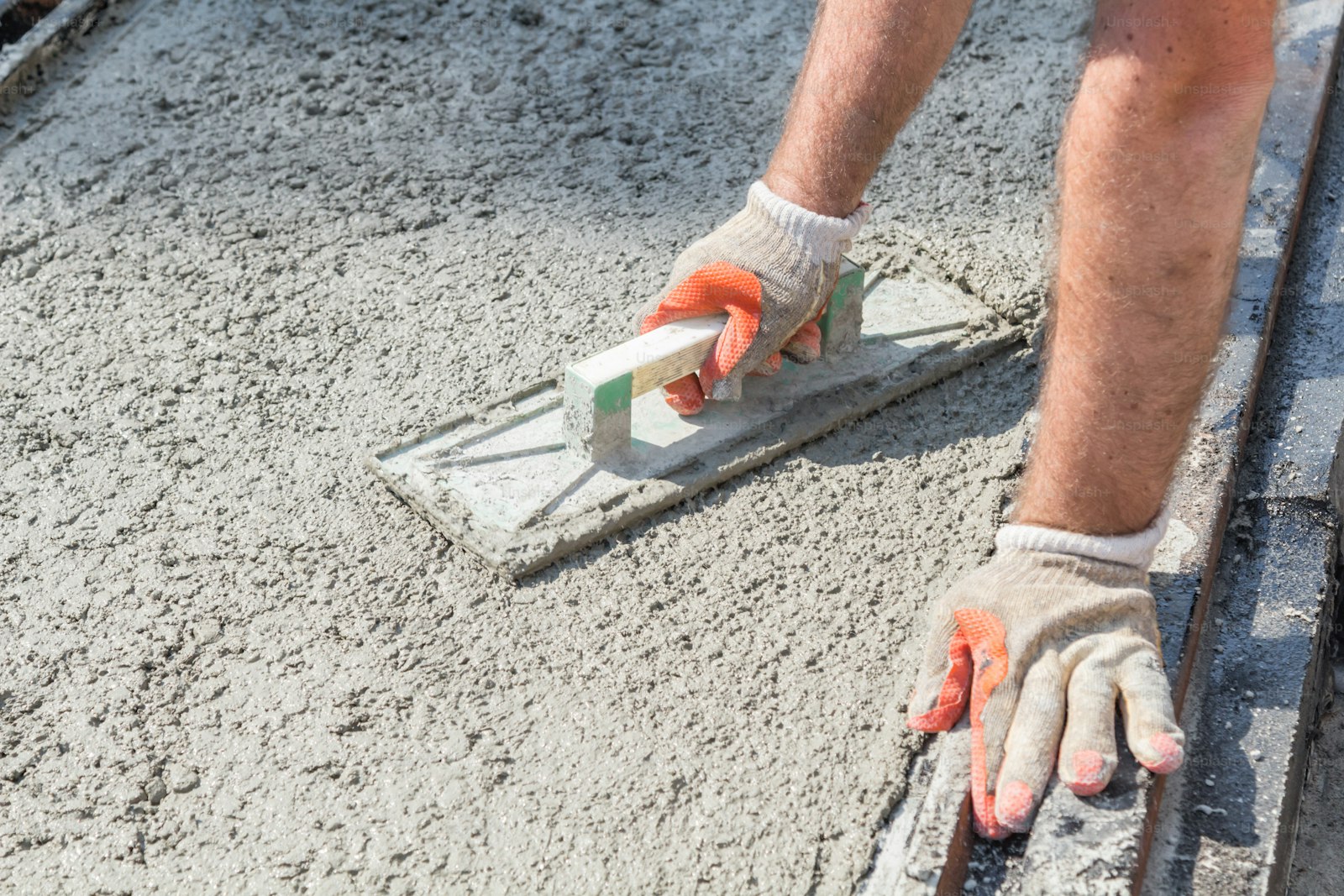
Screed and Subfloor Prep: Why the Layer You Never See Decides Your Floor
Your finished floor will only ever be as flat, as dry and as stable as the subfloor beneath it. Two things must be right before anything is laid: geometry (flatness, checked with a straightedge over an agreed span) and residual moisture (measured with an instrument, never estimated from the calendar). A screed, in Dutch a dekvloer, is a build-up layer that creates a new floor plane and can carry underfloor heating. A levelling compound, egaline, is a thin smoothing skin that inherits the strength and moisture behaviour of whatever it is poured onto. Most avoidable flooring failures in Dutch homes — cupped laminate, bubbling PVC, hollow patches, cracked joints — come from covering a base that was still wet, still moving, or never flat enough.
The covering inherits everything underneath
Every dip and hump eventually shows through. Glued vinyl and thin LVT telegraph worst, reproducing a trowel mark you can see in raking light; thick laminate on foam underlay hides more. Flatness and levelness are not the same: flatness is local deviation under a straightedge, levelness is whether the plane is horizontal. Flatness is what binds, and a tolerance means nothing unless the measuring length is stated with it. The damage is mechanical: unsupported click joints flex until they break, glued vinyl dents under a chair leg, tiles crack over a ridge. Stiffness counts as much as flatness, and dust, laitance (sinterlaag) or old adhesive breaks the bond.
Screed or levelling compound
A screed is applied in real thickness — sand-cement (zandcement), a cement-based flowing screed, or a calcium-sulfate/anhydrite flowing screed. It distributes load and is the normal way to embed underfloor heating. Egaline only corrects millimetre-scale roughness over a base that is already sound; it adds no structural capacity and cannot fix a floor that flexes. Poured where a screed belongs, it cracks, debonds and goes hollow. Anhydrite flows out well, shrinks little and conducts heat efficiently, which suits underfloor heating, but is moisture-sensitive and wrong for permanently damp rooms; sand-cement tolerates wet zones better yet shrinks more. Anhydrite also forms a surface skin that must be sanded off and vacuumed before priming, or the covering bonds to a weak layer instead of the screed.
Concrete versus an old timber floor
Cast-in-situ concrete is easy: clean, grind, prime, level. Prefab hollow-core and beam-and-block floors, common in post-war portiekflats, are separate elements with camber and height differences, so the flattening layer varies in thickness across the room — a screed job, not an egaline job. Concrete at ground level or over a crawl space (kruipruimte) moves moisture upward for the life of the building; if that space is damp, no amount of drying time helps and you need a vapour-control layer. Old timber floors deflect under load and swell with the seasons, so a rigid layer poured straight on will crack, and their weight limit rules out a thick cement screed. Screw down and stiffen the boards, then add a board overlay or a fibre-reinforced levelling compound over primer — after checking joists, rot and damp below.
Drying and moisture testing
Drying time is not negotiable scheduling. It follows from thickness, composition and climate, and thicker screeds dry disproportionately slower because moisture has only one open surface. It also needs the building ready: shell closed, heating on, ventilation carrying moisture away. A sealed, unheated room stays wet. Moisture must then be measured, and the Dutch reference method is the CM-meting (carbide hygrometer): a sample drilled from the full depth of the screed is reacted with carbide in a sealed vessel, and the pressure reading converts to a percentage. Sample where drying is slowest — mid-thickness, room centre, sheltered corners. Cheap contact meters are for screening only, never a release criterion. Anhydrite tolerates far less moisture than cement, heated screeds face a stricter limit, and they get a heat-up and cool-down cycle (opstookprotocol) logged beforehand. The binding figure is in the covering and adhesive datasheet.
What laying too early looks like
Under impermeable PVC, trapped moisture collects at the glue line and destroys the adhesive; under laminate the core absorbs it, and boards cup, swell at the joints and open gaps months after handover, not on the day. Glued vinyl blisters and lifts at the edges, and alkaline moisture from a cement screed attacks some adhesives outright. Damp with organic material in an unventilated build-up gives mould you cannot fix without lifting the floor. Lay before shrinkage finishes and the screed keeps moving under a fixed covering, so cracks travel up through tiles. Perimeter strips (kimband) and movement joints exist so the floor can move: trim them flush too early, or fail to carry a joint into the covering, and you get buckling.
Sequence, and what to ask a provider
The order runs: strip the old floor, assess the substrate, fix structure and damp, decide screed versus levelling, build up or smooth, dry, measure, prime, lay. That decision cannot honestly be made before removal — what the old covering was hiding usually settles it. Plan build-up height early: doors, thresholds and the bottom stair tread constrain the finished level. When comparing quotations, ask four things. What flatness will be delivered, as deviation under a straightedge of a stated length? How will moisture be measured, at what depth, and do you get it in writing? Does the drying period sit inside their programme or yours? And with underfloor heating, is the heat-up protocol included and logged? In an apartment, check your VvE rules on impact sound first — that lands on the layers under the covering, not the covering. The wait is always cheaper than the repair.