Laminate, PVC or Parquet? Choosing a Floor for a Dutch Home
Three constraints usually settle this before taste enters: how wet the room and subfloor are, whether you have underfloor heating, and whether your apartment owners association (VvE) imposes an impact-sound requirement. PVC/vinyl tolerates moisture best and suits underfloor heating best, but can never be sanded. Wood is the only floor you can refinish repeatedly, and the only one that moves with indoor humidity. Laminate sits between them, but its fibreboard core is moisture-vulnerable and cannot be repaired — only replaced board by board.
What you are actually comparing
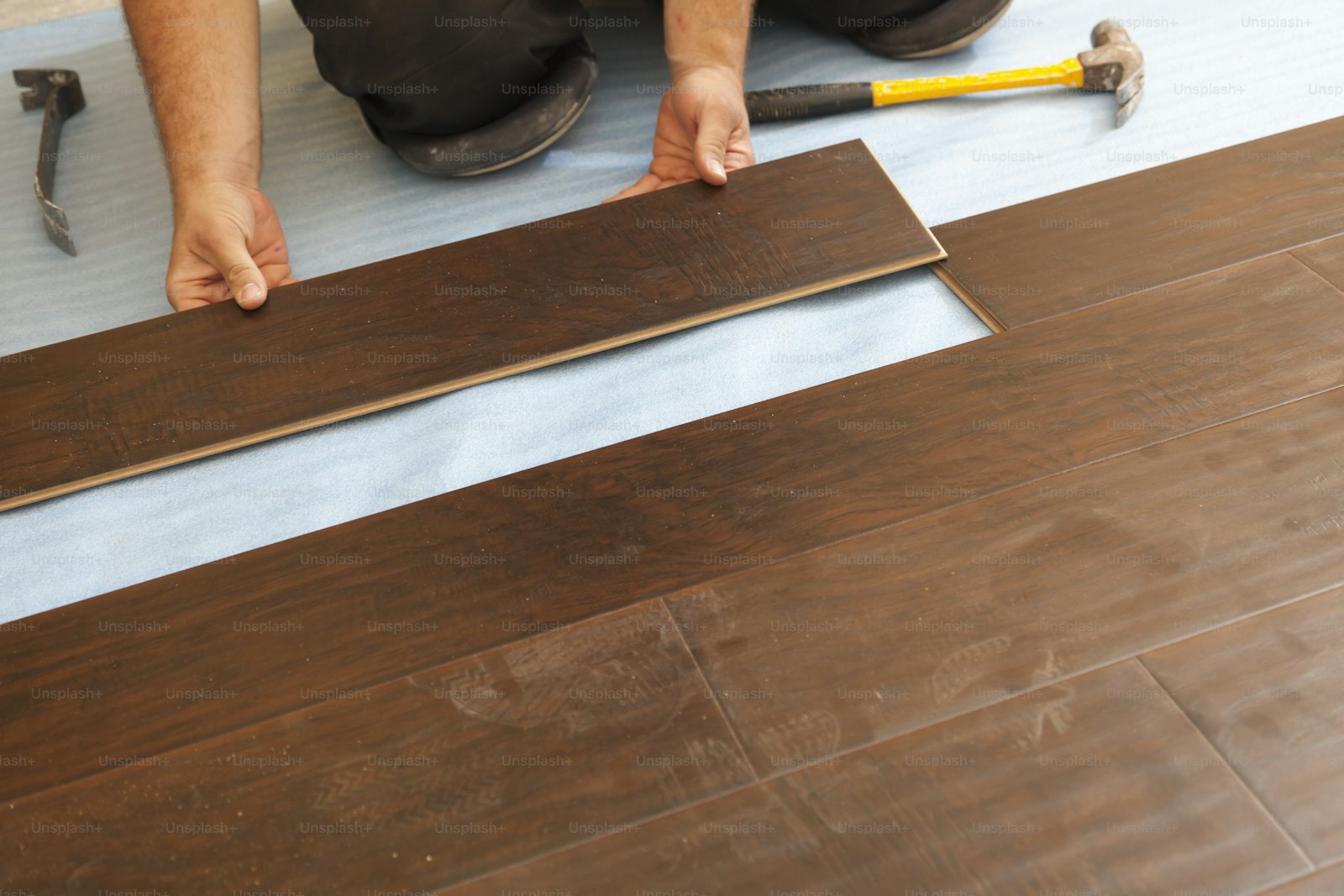
Laminate is a high-density fibreboard (HDF) core under a printed decor and a melamine wear layer — a wood-based board, not wood, almost always floating on click joints. "Vinyl" covers three products that behave differently: dryback LVT (thin plank glued down), rigid click vinyl (SPC or WPC core, floating), and glued sheet vinyl. Parquet splits into solid wood and engineered parquet, a real wood wear layer on cross-laminated ply; engineered is far more stable and is what normally goes over underfloor heating. So don't ask "vinyl or parquet" — ask glued or floating, and solid or engineered. Installation method drives more of the outcome than the material name does — and narrow boards move less than wide planks.
Moisture and the Dutch housing stock
Vinyl is the only one whose base material ignores water, so glued dryback LVT or welded sheet vinyl is the realistic bathroom choice; click vinyl is waterproof as a material, but water passes through the seams onto the subfloor. Laminate's HDF core swells irreversibly once wet — water-resistant grades survive a spilled glass, but edge swelling is permanent. Wood is hygroscopic: through a Dutch winter with the heating on, boards shrink and gaps open; in a humid summer they expand and can cup.
Many pre-war and mid-century houses have a ground floor of timber joists over a ventilated crawl space (kruipruimte). Crawl spaces are frequently damp, so a vapour barrier is a precondition before glueing anything down. On screed, residual construction moisture must be measured first, or you get adhesive failure, cupping or mould. Match the material to the room, not the house: one floor through a whole terraced house usually fails at the bathroom and the sink.
Underfloor heating
Heat must travel through the covering, so the governing property is thermal resistance: thinner and denser wins, and a thick board over a thick underlay throttles the system. Vinyl performs best — thin, dense, fast to respond, and glued vinyl couples directly to the heated screed. Engineered parquet is the parquet type here, preferably glued full-surface; solid wood is generally discouraged. Laminate works with a thin, thermally conductive underlay rated for the purpose; the classic mistake is a thick comfort underlay that insulates the heat away. All three need the same commissioning discipline: run the heating protocol and bring the system down before the floor goes on, then raise temperature gradually. Surface temperature limits are your warranty condition.
Impact sound and VvE rules
The nuisance that matters is impact sound (contactgeluid): footsteps, dropped objects and chair legs carrying into the flat below. In Dutch flats, hard flooring is often restricted by the deed of division (splitsingsakte) and the VvE house rules (huishoudelijk reglement), which commonly require soft flooring, or a hard floor achieving a measured minimum improvement in impact-sound insulation, and sometimes prior written permission. Requirements differ per building, so read your own documents rather than assume a national rule.
So in a flat the acoustic build-up decides whether the floor is allowed at all. Certified figures come from one tested combination of covering, underlay and subfloor, so swapping the underlay voids the claim. Rigid contact with walls, pipes or thresholds bridges the isolation, so perimeter strips stay in and skirting must not clamp the floor down. Floating laminate also drums underfoot.
Wear, damage and repair
Wood is the only one you can renew in place: engineered parquet sands as often as its wear layer allows, so top-layer thickness is lifespan. Laminate cannot be sanded — once the melamine wears through or a board swells, replacement is the only remedy, so keep spare packs from the same batch — decors get discontinued. Vinyl cannot be sanded either, but its wear layer thickness is the honest durability spec, and glued LVT lets you cut out a single plank. Failure modes differ: laminate fails at moisture and impact chips; vinyl indents under furniture legs and castor chairs; wood scratches and gaps with humidity, but ages in colour rather than fading, so rugs leave shadows.
Subfloor demands
Flatness is the most underestimated item. Thin glued vinyl telegraphs every ridge and trowel mark to the surface, so it demands the flattest, cleanest subfloor — usually a self-levelling compound. Floating floors tolerate a little less, but unsupported spans flex the click joints until they fail. Timber joist floors add their own list — fix deflection and squeaks, secure loose boards, consider an overlay board. Every floating floor also needs a continuous perimeter expansion gap; closing it with rigid skirting or silicone is why floors peak. Wood needs acclimatisation in unopened packs before it goes down. Measure build-up height too: compound plus underlay plus board can foul doors, thresholds and the bottom stair.
What to ask when you request quotes
Ask how the installer checks subfloor moisture and flatness, and what happens to the quotation if levelling is needed. Ask whether removing and disposing of the old floor is included. In a flat, ask which certified build-up they propose and what documentation your VvE will accept. With underfloor heating, ask for the thermal resistance of covering and underlay together. Finally, ask about working hours: shared buildings limit noisy work.